
When modern action titles lean excessively into grueling attrition, high-speed martial arts choreography often takes a backseat to defensive hesitation. Phantom Blade Zero deliberately shatters that convention by prioritizing fluid mastery over relentless punishment. Instead of grinding your patience down to the bone, the game crafts a wuxia power fantasy where every parry, dodge, and counter-strike seamlessly reflects the lethal dexterity of a seasoned martial prodigy. Following its official launch on October 28, 2026, the experience offers a distinct philosophy that rewards expressive offensive tactics over conservative survival strategies.
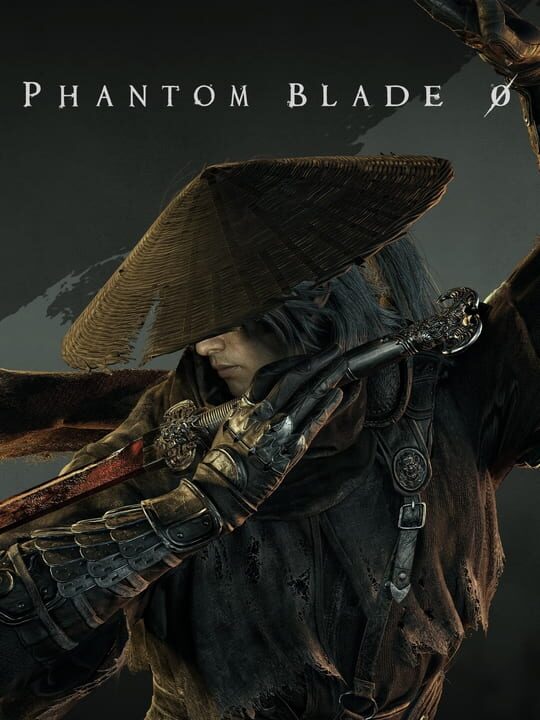
▲ Official Cover Art (Source: IGDB)
Shedding Soulslike Friction for Pure Martial Momentum
While surface-level elements like resting bells and currency systems might initially resemble familiar dark fantasy blueprints, Phantom Blade Zero strips away virtually all punitive friction. Resting at checkpoints does not bring defeated grunts back to life, dying carries no penalty of lost remnant echoes, and boss encounters feature checkpointed phases. If you fight an adversary into their multi-stage transition and subsequently fall, re-entering the arena immediately resumes the encounter in that second phase. This fundamental structural change keeps narrative and mechanical momentum brisk, ensuring that your hands stay warm and focused on mastering choreography rather than re-clearing monotonous corridors.
The pacing of the combat itself answers the long-standing debate surrounding posture-based combat systems. Rather than rewarding a broken stamina gauge with a canned, single-hit critical execution, posture breaks in Phantom Blade Zero trigger an extended vulnerability window where enemy defenses crumble completely. Because standard offensive swings cost zero stamina, players are pushed to unleash customized combos, seamlessly weaving light blades, blunt polearms, and secondary implements into stylish assaults. You are never incentivized to wait around passively for deflections; you dictate the pressure from start to finish.
Arsenal Depth and the Versatility of Phantom Edges
Much of this offensive creativity flows from an astonishingly broad gear sandbox. Alongside an extensive roster of primary arms, Soul commands a utility framework known as Phantom Edges. Functioning far more generously than traditional shinobi tools, these secondary gadgets operate on a spark resource that replenishes upon resting and can be continuously reclaimed in the field via specialized accessories and execution passives. Whether launching the searing chained brazier of the Fire Meteor or swinging the bone-shattering Dread Axe, utility weapons integrate directly into primary attack strings without stalling kinetic flow.
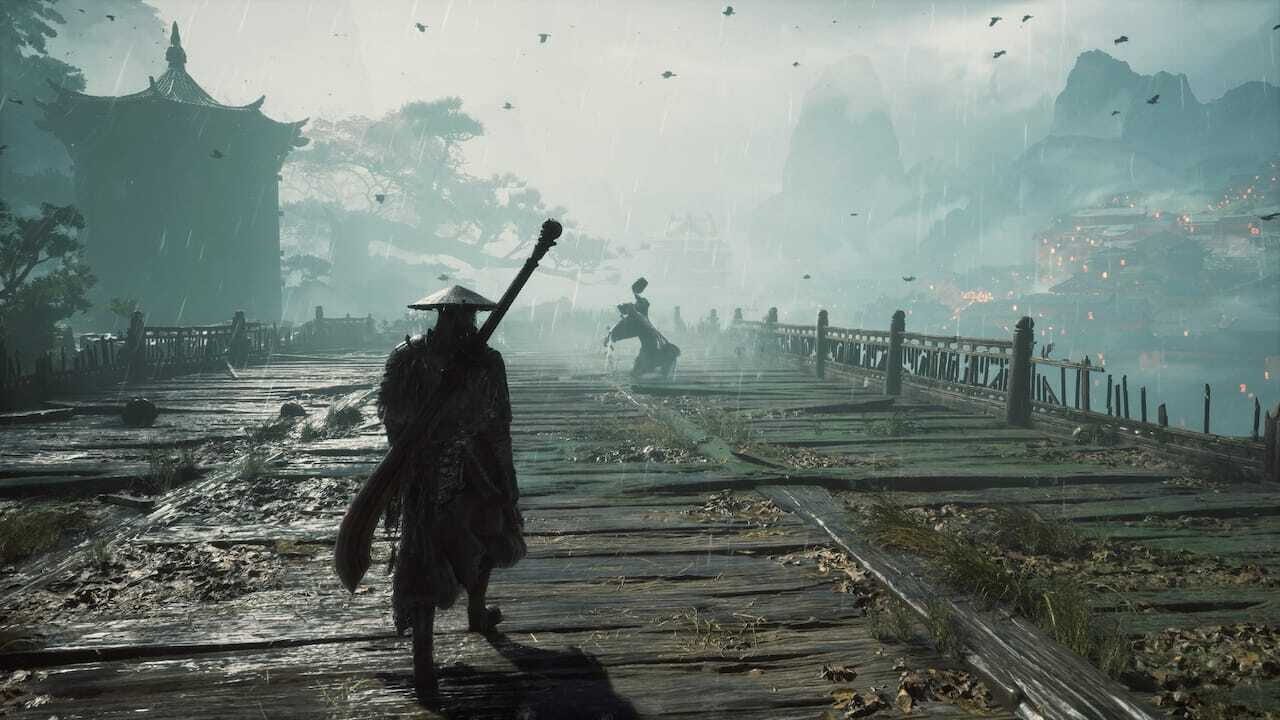
▲ Gameplay & Official Media (Source: IGDB)
The progression economy further champions dynamic experimentation. Weapons and Phantom Edges unlock distinct passive perks every five levels up to an upgrade ceiling of level thirty, backed by completely refundable crafting materials. With over twenty main armaments and twenty-two unique Phantom Edges to uncover, this zero-friction refund mechanic encourages real-time build pivoting rather than forcing players to commit irrevocably to a single scaling stat. The expansive gear loop makes stepping into New Game Plus an exhilarating venture, granting the tactical breadth necessary to tackle aggressive encounter scalings with fresh loadout combinations.
Narrative Drive Versus Overzealous Guidance
The game grounds its stylish combat within a somber, rain-soaked martial underworld known as Pangzhen. The narrative follows Soul, an outlaw martial prodigy fitted with the mechanical Tainted Heart that grants him precisely sixty-six days of borrowed life to track down his treacherous sworn brother, Zuo Shang. This ticking clock translates cleverly into the highest difficulty setting, which caps the entire playthrough at sixty-six finite lives. Interspersed with atmospheric cutscenes ranging from stark cinematic duels to stylized Chinese shadow puppetry, the dark wuxia atmosphere hits exceptional narrative high notes, further amplified by a stunning musical score that blends traditional folk instrumentation, throaty vocals, and aggressive modern percussion.
However, the journey stumbles slightly in its environmental navigation and discovery loop. Despite offering a sprawling campaign clocking in around fifty hours for completionists, the world design errs heavily on the side of hand-holding. While Phantom Edges act as environmental keys to backtrack into previously sealed zones, the persistent proliferation of direct quest markers and excessive map pings strips away the thrill of organic exploration. Hidden groves, optional encounters, and path-altering decisions are signposted so aggressively that the world rarely allows players to feel the joy of true, unguided discovery.
Pros and Cons Analysis
- Pros: Fluid, high-octane martial arts combat that heavily rewards proactive offensive pressure.
- Pros: Generous build mechanics featuring instant material refunds and a massive arsenal of secondary Phantom Edges.
- Pros: Respectful progression checkpoints, including preserved boss phases and zero lost currency upon death.
- Pros: Striking dark wuxia visual identity paired with an electrifying, genre-fusing soundtrack.
- Cons: Overly dense map markers and hand-holding quest trackers dampen the thrill of secret discovery.
- Cons: Particle-heavy encounters can occasionally introduce brief frame dips during intense weather sequences.
📌 Frequently Asked Questions (FAQ)
Q. Is Phantom Blade Zero considered a traditional Soulslike?
A. No, Phantom Blade Zero deliberately diverges from standard Soulslike conventions by removing death penalties for currency, keeping defeated regular enemies dead after resting at bells, and saving mid-battle boss phases if you fall during combat.
Q. How does the posture breaking mechanic function during boss fights?
A. Breaking an enemy stamina bar does not trigger an instantaneous critical cinematic strike. Instead, it creates an extended vulnerability window where the opponent cannot guard, allowing players to execute sustained, customized offensive combinations.
Q. What is the penalty limitation in the game highest difficulty setting?
A. Reflecting the story premise where protagonist Soul survives on an artificial heart lasting only sixty-six days, the hardest difficulty restricts players to a maximum pool of sixty-six total lives across the entire campaign.
Aggressive Fluidity Over Attrition Defines the New Combat Benchmark
By deliberately eliminating punitive progression mechanics, Phantom Blade Zero successfully pivots the hard-action genre away from reactive survival and toward expressive martial roleplay. The combination of infinite basic stamina, multi-phase boss persistence, and freely reallocatable arsenal investments proves that mechanical depth thrives best when player experimentation is completely unimpeded by artificial penalties.
Final Pulse Score: ⭐⭐⭐⭐☆
Related Article: Phantom Blade Zero Gameplay Preview Analysis
Related Article: Phantom Blade Zero Donnie Yen Combat Breakdown